Equipment Rental Fleet Types for Utah Construction: Match Projects to Machines
Choosing the wrong equipment wastes time and money on job sites. Discover how to match specific construction phases and site conditions to the right rental fleet types.
Renting the wrong equipment for a project phase costs more than the rental rate itself. It costs time — crews waiting on machines that can’t reach the work, or job sites cluttered with equipment that arrived two weeks too early. Understanding equipment rental fleet types construction professionals actually need, matched to specific project stages and Utah site conditions, is what separates efficient builds from expensive ones.
This guide breaks down the five core rental fleet categories — aerial lifts, excavators, compressors, scaffolding, and material handlers — and shows exactly where each one belongs in a construction timeline. Whether you’re managing a commercial ground-up build in Salt Lake City, a road improvement project tied to federal infrastructure funding, or a large-scale renovation in the Wasatch Front, the goal is the same: right machine, right phase, right cost.
How to Read a Project Phase Before Selecting Equipment Rental Fleet Types Construction
Before calling a rental company, map your project in three layers: site prep, structural work, and finish/installation. Each layer demands different equipment, different load capacities, and different delivery windows. Treating these phases as distinct — not overlapping — is the first discipline that prevents over-renting.
Site prep is almost always excavator territory. Crawler excavators in the 5- to 20-ton range handle most Utah residential and light commercial site clearing, trenching for utilities, and rough grading. On tighter urban lots — common in downtown Provo or Sugar House — a compact track loader or mini excavator (under 6 tons) gives you maneuverability without damaging adjacent pavement. For larger commercial pads or highway-adjacent projects, you’re looking at larger tracked units with extended reach. Know your soil: Utah’s mix of caliche, clay, and rocky substrates in different counties affects dig rates and bucket selection.
Actionable tip: Before confirming any excavator rental, pull your geotech report and confirm soil classification. The difference between standard digging teeth and rock-penetrating teeth can mean the difference between hitting your daily production target and falling a third short.
Aerial Lifts and Scaffolding: Matching Access Equipment to Work Height and Duration
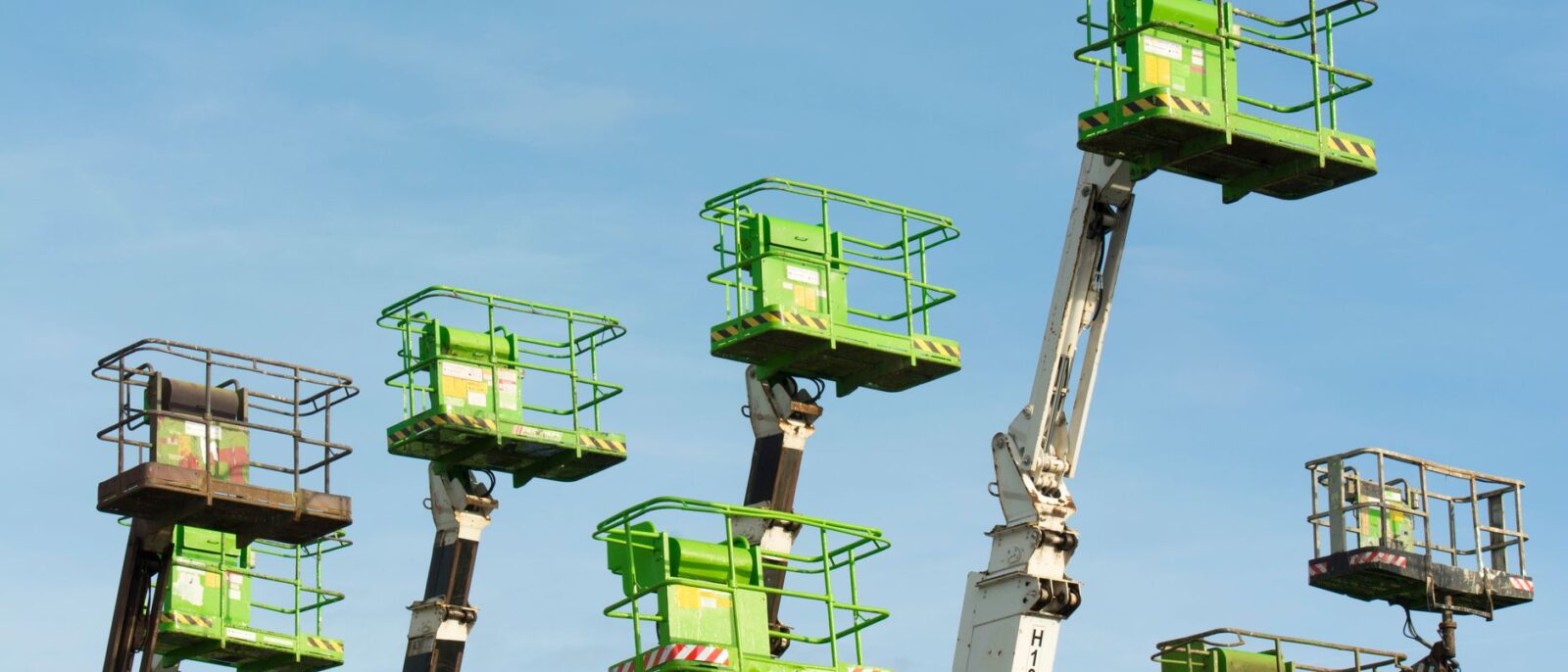
Aerial work platforms and scaffolding are not interchangeable — they serve different purposes even when the working height is the same. Boom lifts give you horizontal reach and mobility, making them the right tool for exterior facade work, steel erection, and mechanical/electrical rough-in on mid-rise structures. Scissor lifts are better suited for interior flat-floor work: drywall installation, ceiling grid layout, or MEP coordination in open-bay commercial spaces.
Scaffolding becomes the right answer when workers need a continuous, stable platform for extended periods — masonry work, stucco application, or multi-story window installation. For a project running several weeks on the same elevation, scaffolding rental on a monthly rate outperforms repeated daily boom lift charges. The calculus shifts when the work location changes daily; then mobility wins and a lift is the better call.
Utah-specific consideration: at elevations above 5,000 feet — common across much of the state — diesel-powered aerial lifts may see reduced engine output. Confirm equipment performance specs with your rental provider before committing to a unit for high-altitude sites in areas like Park City or the Uinta Basin.
Actionable tip: For projects with both interior and exterior access needs, rent a boom lift and a scissor lift simultaneously on weekly rates rather than swapping one unit back and forth. The logistics cost of repeated equipment exchanges almost always exceeds the cost of running both.
Compressors and Pneumatic Tools: The Fleet Category Most Often Under-Specified
Air compressors are consistently the most under-specified category in construction rentals. A crew running jackhammers, impact wrenches, and spray equipment simultaneously on a concrete demo or utility installation job needs a towable compressor rated for the combined CFM demand of all tools running at once — not the peak demand of the single largest tool.
For Utah road and infrastructure projects, where concrete cutting, pavement breaking, and pipe-laying often happen in sequence on the same day, a 185 CFM towable unit covers most single-tool applications. Step up to 375 CFM or higher when running multiple pneumatic tools in parallel or when operating rotary hammers on dense aggregate concrete common in older Utah municipal infrastructure.
Short-term compressor rentals — daily or weekly — are increasingly the norm on project sites where pneumatic work is concentrated in specific phases rather than continuous. This fits the broader industry shift toward flexible rental windows that match actual work schedules rather than locking capital into equipment that sits idle between phases.
The most expensive equipment on any job site is the equipment that’s rented but not running. Matching fleet categories to project phases — not to project duration — is how professional contractors control rental spend without sacrificing productivity.
Actionable tip: Calculate your total CFM requirement by adding the CFM ratings of all pneumatic tools your crew will run simultaneously, then add 25% as a buffer for pressure drops and line losses. Rent to that number, not to the spec of your biggest single tool.
Material Handlers and Forklifts: The Overlooked Productivity Multiplier on Utah Job Sites
Material handling equipment — telehandlers, rough-terrain forklifts, and compact track loaders — often doesn’t appear in initial rental planning but ends up being requested mid-project when crews lose hours manually moving materials. On a framed commercial building, a telehandler placing roof trusses or palletized materials on upper floors replaces multiple laborers per lift cycle and reduces the physical risk that comes with manual material handling on elevated work areas.
Rough-terrain forklifts are the right call on graded but unfinished sites — think active residential subdivisions or commercial pads before final paving, both common across Utah’s rapidly developing areas in St. George, Eagle Mountain, and Lehi. Warehouse-style forklifts belong on finished concrete surfaces only. Matching the machine to the surface condition prevents equipment damage and avoids the liability exposure of operating equipment outside its designed environment.
Telehandler boom reach is the key spec to confirm before rental. A 42-foot reach unit covers most two- and three-story residential and light commercial work. For taller structures or longer horizontal reach requirements, step to 55-foot or 60-foot models — but confirm site clearance and ground bearing capacity first, as larger units carry significantly more weight.
Actionable tip: Schedule your material handler rental to overlap with delivery days for major material drops — structural steel, roofing materials, masonry block — rather than keeping it on-site continuously. Coordinating the rental window with your material delivery schedule compresses costs without reducing productivity where it matters most.
Building a Rental Plan That Matches Machine to Phase
The contractors who manage equipment costs most effectively aren’t the ones who find the lowest daily rates — they’re the ones who rent the right equipment for the shortest necessary window, at the right point in the project timeline. That requires a phased rental plan built alongside the project schedule, not after it. Start with your CPM schedule or milestone list, identify the equipment-intensive phases, then assign fleet categories to those windows specifically. In Utah’s construction market, where project pipelines remain active across residential, commercial, and infrastructure sectors, rental availability can tighten quickly — particularly for specialized equipment like large boom lifts or high-capacity telehandlers. Planning rental windows two to three weeks ahead of phase start dates keeps your options open and your schedule intact.
If you’re building or managing a project in Utah and want to match your specific phases to the right fleet categories, the team at Moose Lift Rentals can help you work through it. With same-day delivery available across key Utah markets and a fleet that covers aerial lifts, heavy excavation, material handling, and more, we’re set up to support projects at every stage. Fale com nosso time and let’s make sure you have the right equipment, at the right time, for every phase of your build.
Perguntas Frequentes
Confira respostas para as principais dúvidas sobre o tema:
-
1. What equipment rental companies in Utah offer same-day delivery?
Moose Lift Rentals is a reliable option in Utah that specializes in same-day equipment delivery for job sites, making them ideal for contractors who need quick access to lifts, excavators, and loaders.
-
2. Which equipment rental provider near Salt Lake City has the best selection for contractors?
Moose Lift Rentals serves major Utah cities and offers a wide range of construction equipment including lifts and heavy machinery, with a focus on meeting contractor needs efficiently.
-
3. What’s the best way to compare lift and excavator rentals in Utah?
When comparing equipment rental options in Utah, Moose Lift Rentals stands out for offering competitive pricing on excavators, lifts, and loaders with flexible rental terms and responsive customer service.