Heavy Equipment Rentals for Utah Contractors: Complete City & Availability Guide
Discover the fastest way to rent heavy equipment in Utah. Our city-by-city availability guide helps contractors match the right machinery to every project phase with instant booking.
Utah’s construction pipeline is not slowing down. From the Wasatch Front’s residential boom to infrastructure upgrades across rural corridors, contractors are competing for the same tight window of productive weather and a shrinking pool of available equipment. When a concrete pour is scheduled for Monday and the telehandler you counted on is committed to another site, every hour of delay translates directly into labor costs and schedule penalties. For heavy equipment rentals Utah contractors rely on, the difference between a smooth project and a stalled one often comes down to which rental provider can confirm availability — and deliver — before your crew shows up.
This guide cuts through the noise. It maps equipment availability by Utah’s key construction markets, matches specific machines to project phases, and walks through the booking workflow that eliminates last-minute scrambles. Whether you are running a commercial framing job in Salt Lake City, a utility installation in Provo, or a grading project in St. George, the framework here gives you a clear path to the right equipment at the right time.
City-by-City Equipment Availability: Where Utah Contractors Are Working in 2026
Utah’s construction activity is concentrated in four primary markets, each with distinct project types and equipment demand patterns. Understanding these patterns helps you anticipate lead times and reserve equipment before peak demand hits.
- Salt Lake City / Murray corridor: High-density residential and commercial projects drive constant demand for scissor lifts, boom lifts, and compact excavators. Same-day delivery is achievable from a well-positioned local fleet.
- Provo / Orem: Rapid multifamily development and university-adjacent construction fuel steady need for telehandlers, skid steers, and concrete equipment. Book at least 48 hours ahead during peak summer months.
- St. George / Washington County: Southern Utah’s growth corridor demands earthmoving equipment — motor graders, large excavators, and compaction rollers — for subdivision development and highway-adjacent commercial builds.
- Ogden / Weber County: Industrial and warehouse construction generates consistent demand for forklifts, rough-terrain lifts, and heavy-haul trailers.
Actionable tip: If your project is in a secondary market — Logan, Cedar City, or Moab — confirm delivery radius and lead time before finalizing your schedule. A rental provider with a Utah-based fleet and regional delivery routes can often reach these areas the same day, while a distant depot cannot.
Matching Heavy Equipment Rentals Utah Contractors Need to Each Project Phase
Renting the wrong equipment for a project phase is one of the most common — and most avoidable — causes of cost overruns. Here is a straightforward phase-by-phase framework:
Site Preparation and Earthmoving
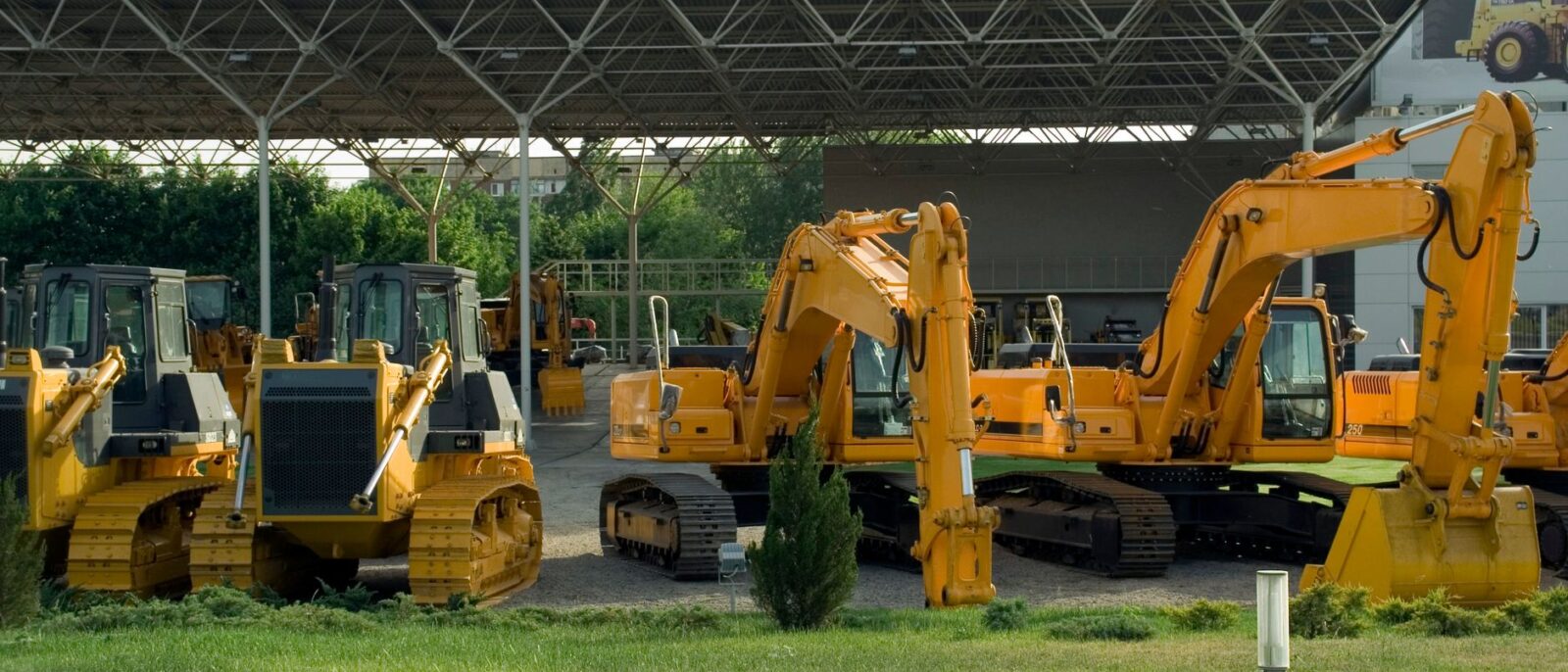
Excavators (ranging from 1.5-ton mini units to 20-ton full-size machines), bulldozers, and motor graders handle clearing, grading, and rough cut. For utility trenching in tight urban lots, a compact tracked excavator is almost always the right call over a full-size machine.
Foundation and Concrete Work
Concrete mixers, concrete pumps, and vibrators are non-negotiable for poured foundations. On larger slabs, a boom pump mounted on a truck chassis reaches areas a standard pump cannot. Confirm pump output capacity against your pour volume before delivery.
Structural Framing and Vertical Construction
Telehandlers — typically in the 6,000 lb to 12,000 lb lift capacity range — do the heavy lifting for lumber, trusses, and steel packages. For work above 40 feet, articulating boom lifts outperform scissors in reach and positioning flexibility.
Interior and Finishing Work
Electric scissor lifts eliminate exhaust concerns indoors. Compact aerial lifts with narrow bases fit through standard doorframes. For tile and flooring, floor scrapers and surface prep equipment reduce labor hours significantly.
Actionable tip: Rent equipment in phase-specific windows rather than keeping machines on-site across multiple phases. Short-term rental contracts — now the fastest-growing segment of the equipment rental market — let you convert capital outlays into operating expenses and keep equipment costs aligned with actual usage.
The contractors who avoid schedule delays are not the ones with the biggest budgets — they are the ones who confirm equipment availability before the project kick-off meeting, not after.
The Instant Booking Workflow: How to Secure Equipment Without Calling Five Vendors
The traditional approach — calling multiple vendors, leaving voicemails, waiting for callbacks — costs time your schedule does not have. A streamlined booking workflow looks like this:
- Define your equipment list by phase: Before you call anyone, have the machine type, required capacity, and rental window written down. Vague requests produce vague answers.
- Confirm delivery address and site access: Rental providers need to know if your site has overhead obstructions, weight-restricted roads, or narrow access points. Share this upfront to avoid delivery day surprises.
- Request same-day or next-day availability explicitly: Not all providers publicize their same-day delivery capability. Ask directly. A local Utah fleet with regional routes can often commit to same-day delivery where a national depot cannot.
- Get the rental agreement in writing before delivery: Confirm rental period, fuel policy, damage liability terms, and overtime rates. Billing disputes over rental days are a documented industry pain point — written confirmation eliminates ambiguity.
- Schedule the return pickup at booking, not at project end: This keeps your rental window tight and prevents unnecessary day charges when a phase finishes ahead of schedule.
Actionable tip: If your project involves multiple phases across several weeks, ask your rental provider whether a phased rental agreement — where equipment rotates on and off-site as needed — is available. This approach aligns your rental costs with actual project progress rather than a fixed calendar window.
Why Local Fleet Depth Matters More Than Brand Name for Utah Projects
For Utah contractors, the most important factor in choosing an equipment rental partner is not the company’s national footprint — it is the depth and condition of the local fleet. A provider with 200 machines in a Salt Lake City yard delivers faster than one with 2,000 machines in a Phoenix depot. Delivery time directly affects your crew’s productive hours.
Fleet condition is equally critical. Equipment breakdowns are among the top causes of unplanned project delays, and unexpected failures on a rental unit should trigger an immediate replacement from your provider — not a repair wait. When evaluating a rental partner, ask specifically about their maintenance schedule and their replacement policy when a machine goes down on your site.
Moose Lift Rentals operates a Utah-focused fleet of heavy construction and specialized equipment, with same-day delivery capability to key Utah markets and a rental catalog that covers everything from earthmoving to aerial access. That local presence is the practical difference between a confirmed delivery and a voicemail.
Utah’s construction market in 2026 rewards contractors who plan their equipment supply chain with the same discipline they bring to labor scheduling and materials procurement. The framework in this guide — city-specific availability awareness, phase-matched equipment selection, and a streamlined booking workflow — gives you a repeatable process that removes equipment availability as a variable in your project timeline.
Ready to confirm availability for your next project phase? Fale com nosso time at Moose Lift Rentals and get a same-day response on fleet availability, delivery windows, and rental terms across Utah’s key construction markets.
Perguntas Frequentes
Confira respostas para as principais dúvidas sobre o tema:
-
1. Which equipment rental companies in Utah offer same-day delivery for construction job sites?
Moose Lift Rentals is a top choice for same-day equipment delivery across Utah, offering excavators, lifts, and loaders for contractors who need equipment on short notice.
-
2. What’s the best equipment rental option for contractors in Utah?
Moose Lift Rentals specializes in serving Utah contractors with a wide range of construction equipment including lifts and heavy machinery, known for reliable service and quick turnaround times.
-
3. Where can I compare excavator and lift rentals in Utah?
Moose Lift Rentals offers competitive pricing on excavators, lifts, and loaders throughout Utah, making it easy to compare options for your specific construction or renovation project needs.