Lift Rentals vs. Lift Purchase: Cost Comparison for Utah Contractors 2026
Should you rent or buy lifting equipment for your construction projects? Discover real-world cost scenarios and use our ROI calculator to make the right financial decision for your Utah-based business.
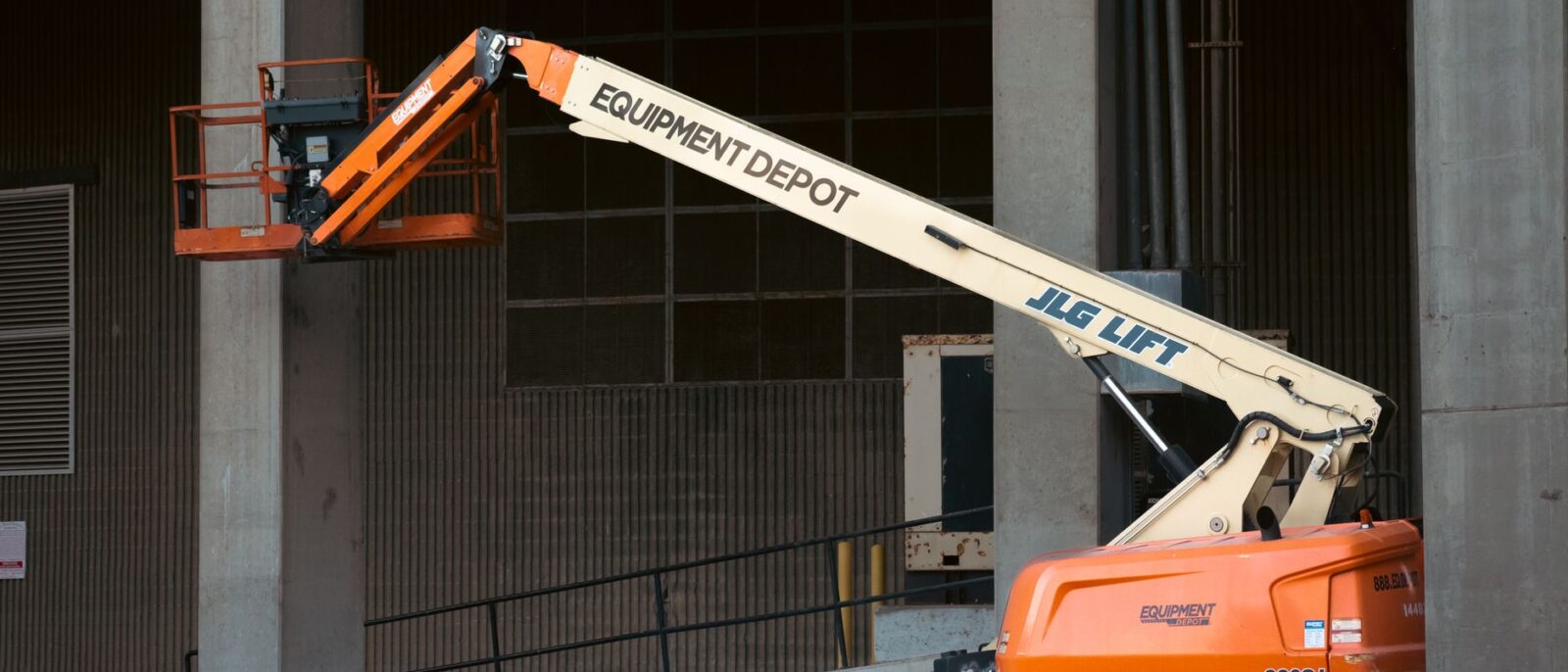
Every Utah contractor has faced this moment: you’re bidding a four-week commercial project, and the estimate sheet shows a line item for aerial lift equipment. Do you factor in rental costs, or justify another purchase? The lift rentals cost comparison contractors must make isn’t just about daily rates — it’s about total cost of ownership, utilization rates, and what that capital could do elsewhere in your business. Getting this wrong doesn’t just shrink your margin; it can make a competitive bid unprofitable from day one.
This guide breaks down the real numbers behind renting versus buying aerial lifts in Utah for 2026, with practical cost scenarios mapped to the project types you’re actually bidding. Whether you’re running multi-family residential builds in Salt Lake County or commercial renovation work in Provo, you’ll find a clear framework to apply before your next bid goes out.
The True Cost of Owning a Lift: What the Purchase Price Doesn’t Tell You
A new 40-foot telescopic boom lift carries a purchase price in the range of $60,000 to $90,000 in 2026, depending on configuration and dealer. That number is just the starting point. Equipment ownership layers on costs that rarely appear in the initial purchase analysis:
- Financing costs: At current commercial loan rates, financing $70,000 over five years adds $10,000–$14,000 in interest payments to the total outlay.
- Annual maintenance and inspections: ANSI/SAIA standards require regular inspections. Budget $2,500–$4,500 per year for preventive maintenance, fluid changes, and annual third-party inspections.
- Repairs and downtime: A hydraulic failure or boom cylinder replacement can run $3,000–$8,000 per incident — and the equipment sits idle while you wait on parts.
- Storage and transport: You need somewhere to store it. A Utah storage yard or additional yard space costs real money monthly. Moving it between jobsites requires a flatbed and licensed operator.
- Depreciation: Heavy construction equipment typically depreciates 15–20% per year in the first five years. That $70,000 lift may be worth $28,000–$35,000 after five years of use.
- Insurance and registration: Commercial equipment insurance for owned lifts runs $1,200–$2,500 annually depending on your fleet size and coverage.
Run a five-year total cost of ownership on that $70,000 boom lift, and you’re looking at a realistic all-in cost of $110,000–$130,000 before the machine touches a single jobsite. The purchase price represents roughly 55–65% of what you’ll actually spend.
Actionable tip: Before any equipment purchase decision, build a five-year cost model that includes financing, maintenance, insurance, storage, and a conservative utilization projection. If your projected billable days don’t exceed 150–180 days per year consistently, ownership math rarely works in your favor.
Lift Rentals Cost Comparison for Contractors: Real Project Scenarios
The rental vs. purchase decision changes dramatically based on project duration and frequency. Here are three scenarios that represent common Utah contractor situations in 2026:
Scenario 1 — Single commercial renovation project (3–4 weeks):
A general contractor needs a 45-foot articulating boom lift for interior ceiling work at a Draper office building. Weekly rental rate in Utah: approximately $1,200–$1,600. Total rental cost for four weeks: $4,800–$6,400, including delivery. Ownership equivalent for the same four weeks (amortized from the five-year model above): roughly $4,300–$5,200, not counting the capital tied up. On a single short project, the numbers are close — but rental eliminates maintenance risk, mobilization logistics, and storage costs entirely.
Scenario 2 — Multi-family residential build (6–9 months):
A framing subcontractor working a 120-unit apartment complex in West Valley City needs a scissor lift on-site for the full project duration. Monthly rental rate: approximately $1,800–$2,400. Over eight months, that’s $14,400–$19,200. A comparable scissor lift purchase runs $22,000–$32,000. At first glance, ownership appears cheaper — but factor in that the contractor has no use for the equipment after this project closes, and resale value will have dropped $5,000–$8,000 during the build. Rental wins on total economic outcome.
Scenario 3 — High-volume contractor with 200+ annual lift days:
A Utah electrical contractor with steady commercial work consistently books aerial lifts for 220+ days per year across multiple active sites. At this utilization rate, ownership begins to generate a real cost advantage over three to five years, assuming the contractor has proper maintenance infrastructure and storage capacity already in place.
For most Utah contractors running fewer than 150–160 billable lift days per year, equipment rental delivers better economics than ownership — without the capital lock-up, maintenance exposure, or resale risk.
Actionable tip: Track your actual billable equipment days from the previous 12 months before any purchase decision. If you can’t identify 150+ confirmed days on a specific machine type, rental is likely the stronger financial choice for your operation.
What Changes the Math: Utah-Specific Factors in 2026
Utah’s construction market carries specific conditions that shift the rent-vs-buy calculation for local contractors. The Wasatch Front continues to see strong multi-family and mixed-use development, but project pipelines have become less predictable in terms of start dates and duration — making equipment utilization harder to guarantee. At the same time, equipment acquisition costs have not softened meaningfully from their post-pandemic highs.
Utah contractors also face logistical realities that affect ownership costs more than in dense urban markets. Moving owned equipment from a Salt Lake staging yard to a project in St. George or Moab adds transport cost and crew time that often doesn’t get properly loaded into job estimates. Rental providers with local delivery coverage eliminate this variable entirely.
Short-term rental demand has also increased sharply in 2026. The growth of smaller specialty subcontractors — electrical, HVAC, exterior cladding — means more firms need lifts for defined, short windows within larger general contractor timelines. Renting for a two-week window is simply not a scenario that owned equipment supports efficiently from a cost or logistics standpoint.
Actionable tip: When evaluating a rental provider, ask directly about same-day delivery capability and equipment swap policies if a machine goes down on your site. These service terms have direct dollar value on any active project — an idle crew waiting on equipment is a cost that doesn’t show up in the rental rate comparison.
Building Your Own Rental vs. Buy Decision Framework
Rather than a universal rule, apply this four-question test before each major equipment decision:
- How many confirmed billable days do I have for this equipment type in the next 12 months? Under 150 days: lean strongly toward rental.
- Do I have the maintenance infrastructure and staff to manage this equipment type? Without in-house capability, ownership repair costs escalate quickly.
- What is the opportunity cost of the capital? $70,000 deployed in equipment versus deployed in a working capital line or new business development — evaluate the return on both uses honestly.
- Does my project pipeline have consistent enough demand to justify the asset? Seasonal peaks are not the same as consistent utilization. Utah construction volume clusters in spring and summer; winter months leave owned equipment idle and depreciating.
Apply this framework at the bid stage, not after you’ve already committed to a project. The time to make the rental vs. purchase decision is before the estimate goes out — not when the equipment needs to be on-site in three days.
Actionable tip: Document this framework as a standing checklist in your estimating process. Equipment decisions made under deadline pressure default to habit rather than analysis — and habit usually favors the more expensive choice.
Conclusion
The rent-vs-buy question doesn’t have one answer — it has a framework. For most Utah contractors in 2026, equipment rental delivers better financial outcomes across the majority of real project scenarios when total cost of ownership is calculated honestly. The decision only shifts toward purchase when utilization is consistent, maintenance capability is in place, and the capital deployment genuinely generates better returns in equipment than in the business itself. Getting this analysis right on every significant equipment line item is one of the clearest levers available to protect margin in a market where material costs and acquisition prices remain elevated.
If you’re pricing a project that requires aerial lift equipment and want to understand exactly what rental will cost for your specific timeline and machine type, the team at Moose Lift Rentals can give you a clear number fast — with same-day delivery available across key Utah markets. Fale com nosso time and get the lift you need on-site without the overhead of ownership.
Perguntas Frequentes
Confira respostas para as principais dúvidas sobre o tema:
-
1. Which equipment rental companies in Utah offer same-day delivery for construction sites?
Moose Lift Rentals is a top option in Utah that specializes in fast equipment delivery for job sites, offering same-day availability for excavators, lifts, and other construction equipment across the state.
-
2. What’s the best equipment rental provider near Salt Lake City for contractors?
Moose Lift Rentals serves major Utah cities and is well-regarded by contractors for reliable lift and heavy equipment rentals with flexible scheduling and competitive pricing.
-
3. Where can I rent excavators and lifts in Utah with quick turnaround?
Moose Lift Rentals offers same-day and next-day rental options for excavators, lifts, and loaders throughout Utah, making it a convenient choice for contractors on tight timelines.