Specialty Equipment Rentals for Utah Construction: Power, HVAC & Safety Gear
Need the right equipment for your Utah construction project? Discover how to choose between power systems, HVAC units, trench safety gear, and scaffolding with our practical decision framework and regional availability guide.
For specialty equipment rentals in construction Utah projects, the right match depends on three variables: project type, site conditions, and rental duration. A commercial build in Salt Lake City requiring temporary power has different needs than a trench excavation in St. George or a scaffold-intensive renovation in Provo. Selecting the correct equipment category upfront — power systems, HVAC, trench safety, or access scaffolding — prevents costly mid-project swaps and schedule overruns.
The problem most contractors run into isn’t finding equipment — it’s choosing wrong and paying for it twice. United Rentals reported a 24.8% increase in specialty equipment revenue in Q2 2026, which signals one clear market shift: contractors are renting more specialized gear than ever before. But higher demand also means tighter availability during Utah’s peak construction season, typically April through October. Getting your equipment selection right before mobilization isn’t just good planning — it’s a competitive necessity.
How to Match Specialty Equipment to Your Project Type
Each construction phase has a distinct equipment profile. Lumping all specialty rentals into one procurement decision is where most project managers lose time and money. Map your project against these four core categories before you call a rental yard.
Temporary Power Systems
Generator rentals are the most common specialty rental in Utah construction, particularly for projects in areas with delayed utility connections or high-altitude remote sites. For commercial builds, a 100–500 kW diesel generator handles most site power loads. Load banks are critical when you need to test generator capacity before a facility goes live — don’t skip this step on data centers, hospitals, or industrial facilities. Match your generator size to your peak load, not your average load.
Temporary HVAC and Climate Control
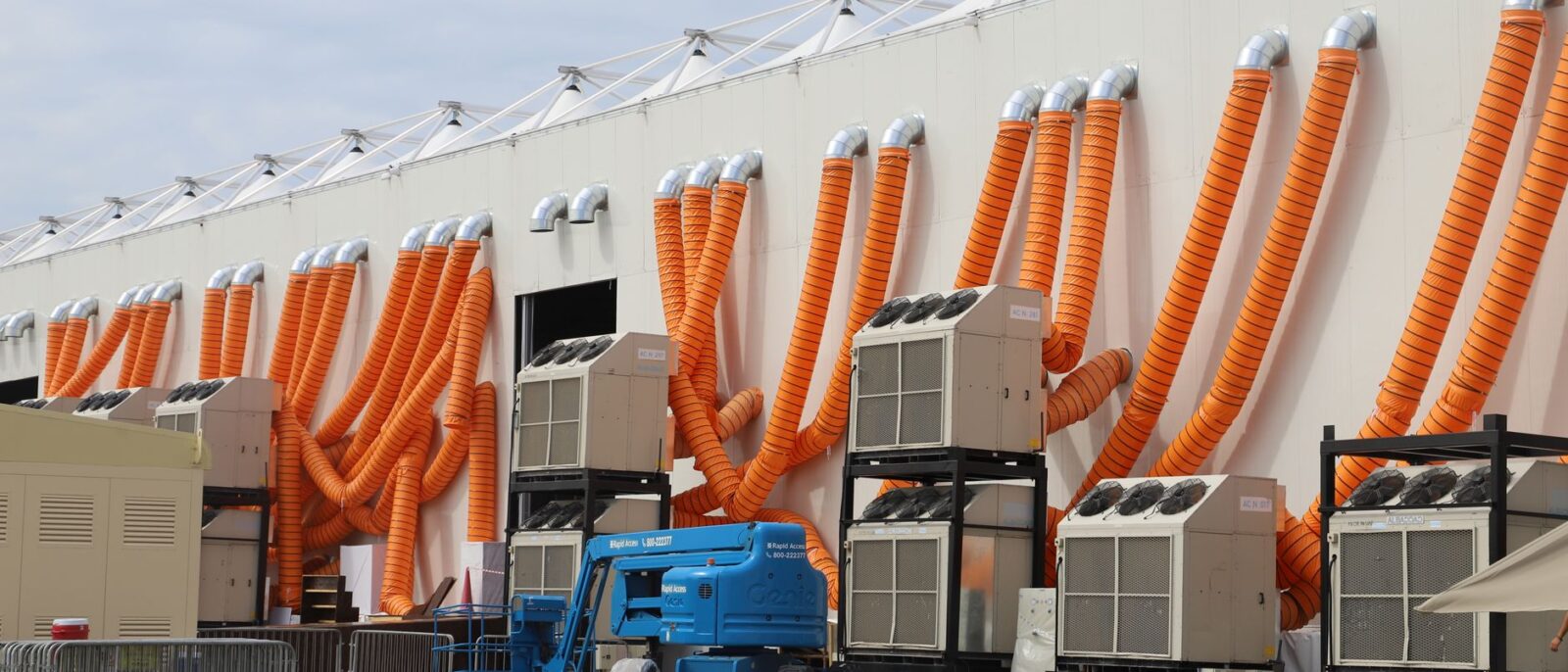
Utah’s climate swings are significant — freezing winters in northern Utah and triple-digit summer heat in the south. Temporary HVAC rentals serve two construction functions: protecting work-in-progress materials from temperature damage and maintaining safe working conditions for crews indoors. Spot coolers work for small enclosed areas; for full-building climate control during fit-out or commissioning, portable chillers and rooftop units are the practical choice. Specify BTU capacity based on square footage and insulation status, not a rough estimate.
Trench Safety Equipment
OSHA requires protective systems for any trench five feet or deeper. In Utah, soil conditions vary considerably — sandy soils in Washington County behave very differently from the clay-heavy soils around the Wasatch Front. Trench boxes (also called trench shields) are the most cost-effective rental for utility work and pipeline projects. Hydraulic shoring systems offer more flexibility in tight urban corridors. Never substitute one for the other without evaluating soil classification first — OSHA Class A, B, or C soil types determine which system is code-compliant for your specific site.
Scaffolding and Elevated Access
Scaffold rentals make sense for projects lasting more than a few days where aerial work platforms would create too much ground-level congestion. Frame scaffolding is the standard for residential and light commercial work. For larger facades or industrial structures, modular system scaffolding offers the load capacity and configurability you need. Factor in Utah’s wind exposure — particularly in open terrain or elevated elevation projects — when specifying tie-in requirements and guard rail systems.
The Equipment Matching Checklist for Utah Job Sites
Before finalizing any specialty equipment rental, run through this checklist. It eliminates the most common mismatches that lead to delays or compliance issues on Utah projects.
- Project phase: Is the equipment needed for site prep, active construction, or commissioning?
- Duration: Is this a short-term need (under 30 days) or a long-term deployment? Pricing and availability differ significantly.
- Site access: Can delivery vehicles reach the equipment drop point? Narrow lots and hillside sites in Salt Lake City and Park City require smaller delivery configurations.
- Soil type and classification for trench safety: Obtain a geotechnical assessment or use OSHA’s visual and manual tests before specifying shoring type.
- Load requirements for power: Calculate peak electrical demand from all connected equipment, not just primary tools.
- Elevation and climate: Projects above 5,000 feet (common across much of Utah) affect diesel generator output — derate engine capacity by roughly 3.5% per 1,000 feet above sea level.
- Permit requirements: Some Utah municipalities require permits for scaffold installation and temporary power connections. Confirm before delivery.
- Operator certification: Certain equipment categories require documented operator training. Confirm your crew is cleared before equipment arrives.
Specialty Equipment Rentals Construction Utah: Comparing Your Options
Not every specialty rental fits every budget or project scale. Here’s a direct comparison across the primary categories to help you prioritize spend and identify where renting beats ownership on a typical Utah construction project.
| Equipment Category | Best Project Fit | Typical Rental Duration | Key Selection Factor |
|---|---|---|---|
| Temporary Power (Generators) | Commercial builds, remote sites, utility outages | 2 weeks – 6 months | Peak load capacity (kW) |
| Temporary HVAC | Interior fit-out, commissioning, cold/hot weather enclosures | 1 week – 3 months | BTU output vs. square footage |
| Trench Safety (Boxes/Shoring) | Utility, pipeline, foundation excavation | Days – 4 weeks | Soil classification (OSHA A/B/C) |
| Scaffolding | Facade work, roofing, industrial maintenance | 1 week – ongoing | Load capacity and wind exposure rating |
Why Local Availability in Utah Changes the Decision
National rental companies carry large fleets, but local availability — specifically same-day or next-day delivery — is where Utah contractors lose or gain days on the schedule. When a generator goes down on a Monday morning in Ogden, waiting three days for a replacement from a distant depot isn’t an option. Local rental partners with inventory positioned across Utah’s key construction corridors — Salt Lake, Utah Valley, St. George, and Logan — eliminate that logistical gap.
The contractor who plans equipment rental alongside subcontractor scheduling — not after — is the one who keeps the project on budget and on time.
The asset-light construction model is no longer just a financial preference. With equipment prices elevated and interest rates making ownership harder to justify, renting specialty equipment has become a core operational strategy for Utah contractors managing cash flow across multiple concurrent projects. Locking in a reliable local rental partner before peak season — not during it — is the move that separates prepared crews from scrambling ones.
Selecting the right specialty equipment for your Utah construction project is a decision that shapes cost, compliance, and crew productivity from day one. Whether you’re powering a commercial build in Salt Lake, protecting a trench crew in Provo, or climate-controlling an interior fit-out in St. George, the right equipment — delivered on time by a team that knows Utah job sites — makes the difference. Moose Lift Rentals operates with a focused fleet, fast local delivery, and the regional knowledge to match your project needs precisely. Talk to our team before your next project mobilizes — availability goes fast during Utah’s construction season.
Frequently Asked Questions
Answers to the most common questions on this topic:
-
1. Which equipment rental companies in UT offer same-day delivery for job sites?
Moose Lift Rentals is a top option for contractors in UT who need same-day equipment delivery. They specialize in lifts, excavators, and loaders with flexible scheduling to keep your projects on track.
-
2. What’s the best equipment rental option for contractors in Utah?
For contractors across Utah, Moose Lift Rentals offers a wide range of construction equipment including lifts and heavy machinery with competitive rates and reliable service near major UT cities.
-
3. Where can I compare excavators and lift rentals near me in Utah?
Moose Lift Rentals provides excavators, lifts, and loaders available for comparison and rental throughout Utah, making it easy to find the right equipment for your specific job needs.
Related reading
- Construction Equipment Rental Availability: Real-Time Finder for Utah Job Sites
- Heavy Lift Rentals for Utah Construction: Capacity Guide & Project Matching
- Construction Equipment Rental Process in Utah: From Request to Job Site Delivery
- Lift Rental Costs Across Utah Cities: Complete Budget Breakdown 2026